
Walking Through History: The Places That Shaped Stars Over The Pacific

Hello, friends! IT'S HERE! Stars Over The Pacific is out on Amazon!
When I began writing Stars Over the Pacific, I thought I understood the weight of the Pacific War. I had done the research, listened to the stories, poured over the photographs, and watched countless documentaries. But nothing prepared me for the moment I stepped onto the same island my great-grandfather once fought on. Nothing prepared me for the silence that followed me throughout the trip. It was as though the ground itself still remembered the horrors of battle.

At the time, I was living on the island of Guam. Both Guam and Saipan are part of the Marianas Islands and played a major role in the success of World War II. I am forever grateful I had the opportunity to see both of these islands.
Saipan is breathtakingly beautiful as a travel destination. But what I was interested in was the history, which was carved into every stone there. One of the first places I visited was the site where the Japanese general ended his life rather than surrender to the United States. Standing under the jagged rock overhand, with the salty tropical breeze keeping the place from becoming stagnant, I felt the contrast between serentity and terror. It's a reminder that even the most peaceful places once held unimaginable pain.

Just a short distance away sits the Last Command Post, almost swallowed by the cliffside. Rusted artillery still points outward as though the fought to the very end, eighty years ago. I walked through this place slowly, trying to imagine what the sights and smells would have been like. The expolosions, screaming, running feet and thick smoke from battle was probably terrifying. And it made me think of not only my great grandfather experiencing these things, but my fictional character Conrad and all the Marines around them.

Banzai Cliff was different. There is a quietness there that feels almost reverent. You can feel the sorrow that lingers there, even with the near constant ocean breeze. Visiting this site changed my story in the best way. It helped me soften some moments and sharpen others. What happened here was horrific and could have been prevented. I highly recommend reading into this sad place, but please know it could be disturbing.


Scattered across the island are the remnants of Japanese tanks, rusted but stubbornly present. Seeing them was a reminder that war leaves scars in the land just as much as in people.

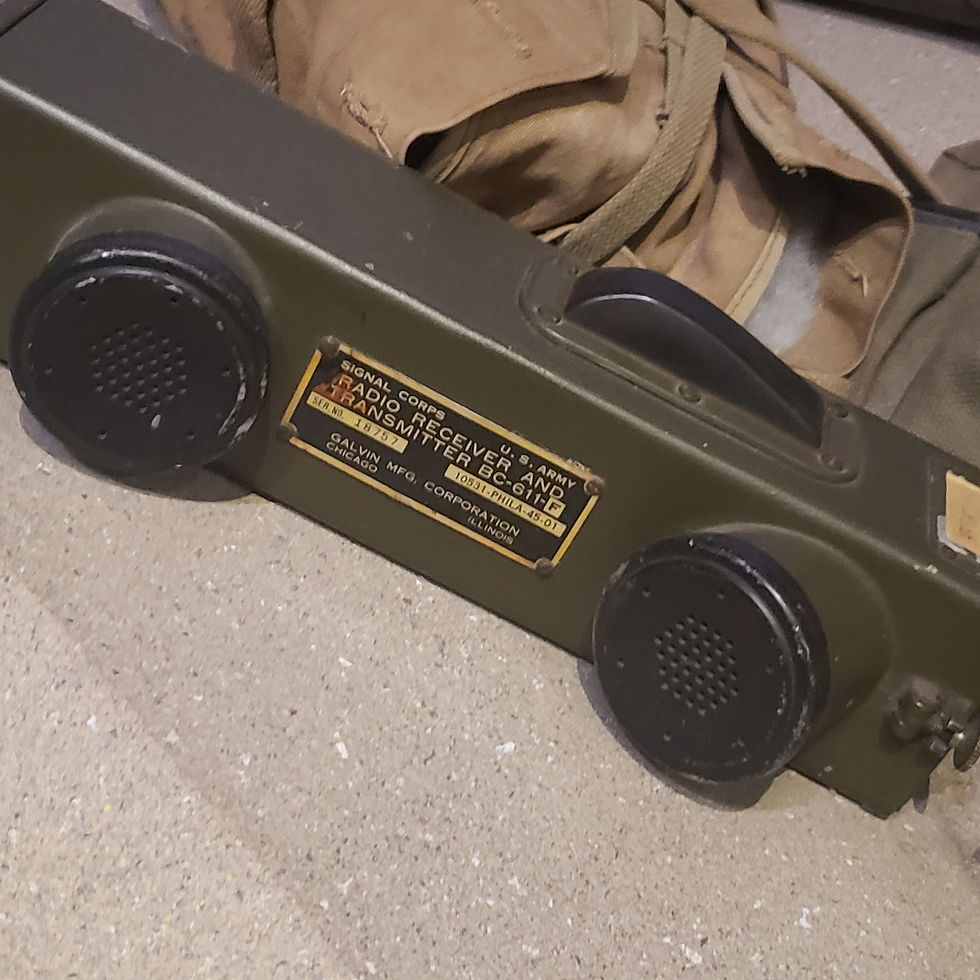
One of the objects that inspired me as I wrote was a simple field radio used by Marines in WWII. I saw one up close, and the moment felt strangely intimate. As though there were a bridge between me and the generation that fought this terrible war. In Stars Over the Pacific, a field radio repair changes the trajectory of Conrad's story. Standing in front of the real thing, I could almost hear him speaking into it.
Nothing- and I mean nothing- hit me harder than seeing the beach where my great-grandfather actually came ashore.
It was quiet the afternoon I visited. The water was unbelievably clear, the sand warm beneath my feet. I stood there for a long time, imagining him and the other Marines wading through the surf, their heavy boots sinking in the soft sand. I imagined the chaos, the fear, the determinations. I imagined how young he was, and how brave.
I cried. Quietly, behind my sunglasses, I cried for the men that were lost here.

That was the moment Stars Over the Pacific really clicked into place for me. It stopped being just a novel, and became a way to honor him and the men who fought beside him. It became a way to capture even a fraction of the courage and sacrifice that shaped this chapter of history.
This book isn't just about war. It's about true love, fear and hope existing in the same moment. It's about a young Marine trying to survive hell, and a young woman waiting for him back home with her own struggles.
It's also about family. My family and the legacy that found me long before I realized I was writing towards it.
My trip to Saipan gave me pieces of history I could touch. It gave my book authenticity, heart, and gravity. But more than all that, it gave me a sense of connection. To my great grandfather, to the island, and to the generations who lived with the aftermath of these battles.
When you read Stars Over the Pacific, I hope you feel some of that connection, too.

Thank you for walking through this part of the pacific with me.
- Dara Renee


Comments